
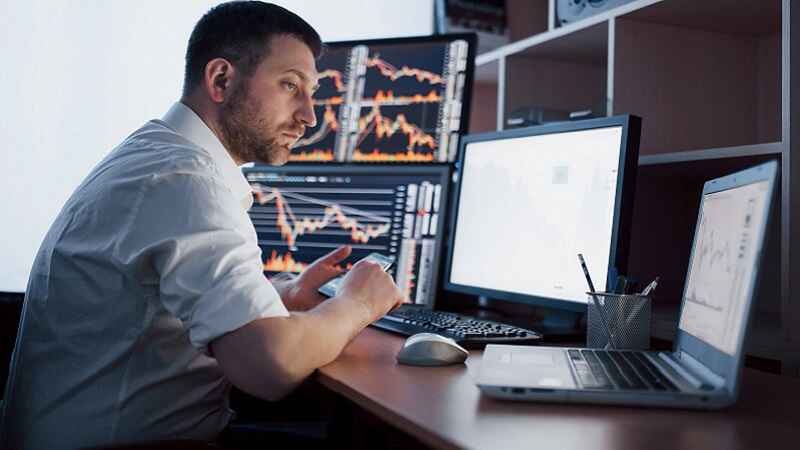
Technology is changing the financial world faster than ever, and ftasiatrading technology news by fintechasia highlights many of the developments shaping modern trading and digital finance. From smarter trading platforms to artificial intelligence, automation, and faster payment systems, new tools are changing how financial businesses operate. At the same time, digital finance is becoming more connected, making speed, security, and reliable data increasingly important for traders and institutions.
Emerging technologies such as AI in fintech, blockchain, and financial APIs are also creating new opportunities across global markets. Understanding these changes can help readers follow the direction of financial innovation. This guide explores the key technology trends, developments, challenges, and future possibilities influencing today’s evolving trading ecosystem.
What Does FTAsiaTrading Technology News Cover?
At its core, the topic connects trading technology with broader fintech innovation. Coverage can include trading platforms, financial APIs, artificial intelligence, blockchain, cybersecurity, digital payments, market analytics, and regulatory technology.
FintechAsia’s June 2026 report specifically describes platform upgrades, order-management tools, analytics, API improvements, security measures, compliance features, and emerging technologies.
Why Trading Technology Matters More Than Ever
Modern trading depends on far more than price charts. Behind every electronic order sits a network of software, databases, exchanges, APIs, authentication systems, and risk controls.
When these components improve, traders can receive information faster and manage orders with greater precision. However, speed alone doesn’t guarantee better outcomes. Reliability, transparency, security, and sensible risk controls remain equally important.
How Modern Trading Platforms Are Evolving
Trading platforms increasingly resemble complete technology ecosystems rather than simple order-entry screens. They combine market data, charting, execution, alerts, portfolio information, APIs, and security features within interconnected environments.
The reported FTAsiaTrading coverage describes upgrades involving execution speed, mobile functionality, advanced orders, analytics, and developer tools. These changes reflect the wider migration toward integrated digital trading infrastructure.
Faster Matching Engines Can Change Execution
Milliseconds can matter when markets move quickly. A matching engine determines how incoming buy and sell orders interact according to the platform’s rules.
The FintechAsia report describes a faster matching engine designed to process more orders while reducing latency. Faster infrastructure can improve responsiveness. Yet actual execution quality also depends on liquidity, network conditions, order design, and market volatility.
Advanced Order Types Give Traders More Control
Order types translate trading intentions into specific instructions. A basic market order behaves differently from a limit order or a conditional instruction.
FintechAsia reports the introduction of tools such as iceberg orders, TWAP execution, and conditional stop-loss variants. These tools can help structure larger transactions, spread execution over time, or automate predefined conditions.
Iceberg Orders Reduce Visible Order Size

Large orders can attract attention when their entire quantity appears publicly. An iceberg order addresses this issue by displaying only part of the intended transaction while keeping the remaining quantity hidden according to platform rules.
The reported FTAsiaTrading update includes iceberg functionality. Such tools demonstrate how order execution technology can influence market interaction beyond simple buying and selling.
TWAP Tools Help Structure Large Transactions
Time-weighted average price strategies divide an order across a selected period. Instead of submitting the entire quantity immediately, an algorithm can distribute execution according to predefined timing rules.
This approach can reduce the visual impact of a large transaction. However, market conditions can change during the execution window. Therefore, algorithmic tools still require appropriate parameters and monitoring.
Conditional Stop-Loss Tools Add Automation
Conditional orders can trigger when specified market conditions occur. This allows trading systems to respond without requiring constant manual intervention.
The FintechAsia report identifies conditional stop-loss variants among the reported platform enhancements. Such functionality demonstrates the growing relationship between automation technology and trading operations.
APIs Are Becoming Essential Trading Infrastructure
Application programming interfaces allow different software systems to communicate. In financial markets, APIs can connect trading platforms with analytics systems, dashboards, portfolio tools, and algorithmic applications.
The reported update includes improved API documentation, examples, versioning, and error handling. Better developer infrastructure can make integrations easier while reducing confusion during software development and maintenance.
Why API Security Deserves Serious Attention
An API can become a powerful gateway into financial infrastructure. Poorly protected credentials or excessive permissions can therefore create unnecessary exposure.
Granular API permissions allow developers to restrict what individual keys can access. FintechAsia reports that more detailed API-key scopes were included in the security improvements. Strong authentication and narrow permissions can reduce an application’s potential attack surface.
Artificial Intelligence Is Entering Financial Workflows
AI is no longer limited to experimental fintech projects. Financial institutions increasingly use machine learning for forecasting, fraud detection, customer services, liquidity management, and operational analysis.
BIS research published in July 2026 notes that the AI boom is generating significant investment while its productivity effects remain uncertain and uneven. This makes AI in finance both a technological opportunity and an area requiring careful evaluation.
AI Can Help Analyze Large Data Sets
Financial markets produce enormous quantities of information. Prices, volumes, economic indicators, company disclosures, news, and transaction records can overwhelm manual analysis.
Machine-learning systems can process large datasets rapidly and identify patterns that deserve further examination. However, a statistical pattern isn’t automatically a reliable trading signal. Data quality, model design, changing market conditions, and validation all matter.
Machine Learning Models Need Continuous Testing
A model that performs well during one market period can deteriorate when conditions change. Markets evolve because participants adapt, regulations shift, liquidity changes, and unexpected events emerge.
The FintechAsia article recommends testing emerging machine-learning tools cautiously and monitoring model drift. That principle applies broadly to machine learning applications in financial technology.
AI Forecasting Is Moving Into Core Finance
Recent industry developments show AI becoming embedded within established financial institutions. Reuters reported in August 2026 that major banks including Citi, HSBC, Deutsche Bank, Standard Chartered, and Barclays adopted Ant International’s upgraded AI tool for foreign-exchange liquidity management.
This illustrates an important shift. AI is increasingly being integrated into operational financial processes rather than treated solely as an experimental add-on.
Agentic AI Could Change Digital Payments
A newer AI development involves systems capable of taking actions on behalf of users. The IMF describes agentic AI as technology that can interpret objectives, plan tasks, and interact with digital services with limited human intervention.
In payments, this could change how users authorize transactions. Yet deterministic financial infrastructure must still preserve control, traceability, settlement certainty, and security.
Digital Payments Are Transforming Asian Finance
Trading technology doesn’t exist in isolation. Payment infrastructure forms another major layer of the digital financial ecosystem.
The IMF reported in 2026 that ASEAN countries have made significant progress in domestic and cross-border digital payments. Faster payment systems can support e-commerce, small businesses, financial inclusion, and regional economic integration.
Cross-Border Payments Need Better Connectivity
Cross-border payments remain complicated because transactions can involve different currencies, banks, regulatory requirements, and settlement systems.
IMF research estimates that Asia accounted for 32% of global cross-border payments in 2024 and could reach 37% by 2032. That projected expansion makes payment connectivity an important technology and infrastructure story.
Mobile Technology Is Expanding Financial Access
Smartphones have become gateways to banking, payments, investment information, and financial services. This shift has lowered some barriers between consumers and digital financial products.
ADB research highlights how digitalization is reshaping finance and inclusion across Asia and the Pacific. However, wider access also increases the importance of digital literacy, cybersecurity, privacy, and resilient infrastructure.
Blockchain Remains Relevant Beyond Cryptocurrency
Blockchain technology has applications beyond speculative digital assets. Financial institutions continue exploring tokenization, shared records, settlement infrastructure, and programmable financial instruments.
BIS discussions on AI and digital finance also identify tokenization as an important area of policy consideration. The practical question is no longer whether blockchain sounds innovative. It is whether a specific use case solves a genuine operational problem.
On-Chain Price Oracles Need Careful Validation
Price oracles can connect blockchain applications with external market information. This makes them useful for decentralized financial systems and certain automated applications.
The FintechAsia report mentions on-chain price-oracle integration for selected crypto pairs. Because automated systems may react to oracle information, data accuracy, freshness, redundancy, and manipulation resistance become crucial considerations.
Cybersecurity Has Become Core Trading Infrastructure
A sophisticated trading platform is only as dependable as its security architecture. Attackers can target credentials, APIs, databases, mobile applications, network connections, or third-party integrations.
Reported FTAsiaTrading coverage describes stronger authentication and session-management measures alongside more granular API permissions. These controls reflect a broader shift toward financial cybersecurity as a central operational requirement.
Multi-Factor Authentication Adds Another Barrier
Passwords alone can become vulnerable through phishing, credential reuse, malware, or data breaches. Multi-factor authentication introduces an additional verification layer.
Hardware-based authentication can provide stronger protection than relying solely on passwords or easily intercepted codes. For financial accounts, these safeguards can become particularly valuable because unauthorized access may have immediate consequences.
Operational Resilience Matters During Volatile Markets
A platform can have excellent features yet still disappoint users if it repeatedly suffers outages. Reliability becomes especially important during sharp market movements when transaction volumes and user activity can rise quickly.
The FintechAsia report describes uptime reporting, recovery metrics, and redundancy measures. Resilient infrastructure helps reduce the operational consequences of unexpected technical disruptions.
Cloud Infrastructure Supports Financial Scalability
Cloud computing allows financial technology companies to access computing resources without building every component inside private facilities. Scalable infrastructure can support changing workloads, analytics, storage, and application deployment.
However, cloud adoption introduces its own concerns. Financial firms must consider vendor concentration, access management, data residency, resilience, and recovery procedures when designing cloud-based systems.
Real-Time Analytics Can Improve Market Awareness
Markets change continuously. Static reports can quickly become outdated during volatile sessions.
Real-time analytics can combine market prices, volumes, technical indicators, and other information within a unified interface. The reported FTAsiaTrading update includes multi-timeframe indicators and session heatmaps. Such tools can make market information easier to organize without guaranteeing accurate predictions.
Data Visualization Makes Complex Information Easier
A trader may need to interpret hundreds of data points within seconds. Good visualization can reduce cognitive friction by displaying trends, volumes, sessions, and changes in an understandable format.
Heatmaps and customizable chart templates can help users compare information consistently. Yet attractive graphics should never replace scrutiny of the underlying data or methodology.
Compliance Technology Is Becoming More Sophisticated
Regulated financial systems generate substantial records. Trade timestamps, transaction details, customer information, and audit trails may need to remain accessible for oversight.
FintechAsia reports enhanced audit trails and immutable logs within its described technology updates. These features reflect the wider rise of regulatory technology, where software helps financial organizations manage reporting and compliance obligations.
Privacy Is Increasingly Connected With Trading Technology
Financial platforms handle sensitive information. Account details, transaction records, identity information, behavioral data, and API activity can all create privacy concerns.
Modern platforms therefore need clear data-access policies and retention controls. ADB’s research on open finance similarly emphasizes that data sharing can create benefits while introducing risks that require careful management.
Open Finance Could Expand Financial Innovation
Open finance allows financial data to move between authorized institutions and services under defined frameworks. This can encourage competition and enable more personalized financial products.
Yet greater connectivity creates additional points of exposure. ADB notes that the benefits of open finance depend heavily on how associated risks are understood and managed. Good technology therefore requires equally strong governance.
Edge Computing Could Reduce Execution Latency
Edge computing places processing resources closer to where data or transactions originate. In financial markets, reducing the distance between applications and execution infrastructure can potentially lower network delays.
The FintechAsia report identifies edge-computing capabilities as part of a future technology direction. Whether latency improvements matter depends on strategy, market structure, connectivity, and actual execution conditions.
Mobile Trading Continues to Become More Capable
Mobile applications have moved well beyond simple price checking. Modern financial apps can provide alerts, charts, portfolio information, order management, and account controls.
FintechAsia reports mobile improvements involving push alerts, order editing, and clearer fee displays. The trend reflects rising expectations for mobile trading technology that remains functional beyond desktop environments.
Trading Technology Must Balance Speed and Safety
Fast systems can provide operational advantages. Yet speed without safeguards can magnify mistakes.
Automated orders can execute quickly when conditions change. Therefore, permission controls, position limits, monitoring, error handling, and recovery mechanisms become essential parts of responsible system design.
The fastest system isn’t necessarily the most dependable. Robust architecture must balance responsiveness with control.
Regulation Will Influence Financial Technology
Technology develops faster than many regulatory frameworks. Authorities consequently face the difficult task of supporting innovation while protecting market integrity, consumers, and financial stability.
BIS research highlights how AI and digital finance can reshape financial systems and create new stability questions. Future regulations may increasingly address algorithmic accountability, data governance, cybersecurity, and automated decision-making.
Asia’s Fintech Ecosystem Is Becoming More Connected
Regional integration is strengthening the relationship between technology companies, banks, payment providers, exchanges, and consumers.
The IMF reports substantial progress in ASEAN payment connectivity and cross-border digital transactions. This creates a larger environment where financial technology developments in one market can influence businesses and users elsewhere.
What Traders Should Watch in Technology News
Technology headlines become more meaningful when readers examine their practical consequences. Useful questions include whether a feature changes execution, improves security, reduces operational friction, or introduces new dependencies.
For example, an API upgrade matters more to developers than a cosmetic interface change. Similarly, an authentication improvement matters because it can reduce account exposure rather than because it sounds technologically advanced.
Why Independent Verification Still Matters
Financial technology reporting can sometimes mix confirmed developments with marketing language or unsupported platform claims. Several websites currently use the FTAsiaTrading name while describing different services and capabilities.
Consequently, readers should distinguish between a published report, a company’s own statement, and independently verified evidence. That distinction becomes especially important when financial decisions are involved.
The Future of Trading Technology in Asia
The next stage will likely combine AI, automation, APIs, real-time data, digital payments, stronger security, and increasingly connected financial infrastructure.
BIS research suggests AI investment will continue influencing economic activity while productivity outcomes remain uneven. Meanwhile, IMF research points toward deeper regional payment connectivity. Together, these trends suggest a financial ecosystem becoming more digital and interconnected.
Final Perspective on FTAsiaTrading Technology News
The most important lesson from ftasiatrading technology news by fintechasia is that trading technology extends far beyond faster charts or new buttons. Modern financial systems depend on execution engines, APIs, AI models, cybersecurity, analytics, payment networks, compliance tools, and resilient infrastructure. FintechAsia’s reported 2026 updates provide one example of this broader transformation.
At the same time, the wider Asian market demonstrates why technology deserves broader context. Digital payments are expanding across borders. AI is moving deeper into financial institutions. Open finance is creating new data-sharing possibilities. Meanwhile, regulators are examining the risks created by increasingly automated systems.
For readers following FTAsiaTrading technology news by FintechAsia, the most useful perspective is therefore neither hype nor dismissal. Technology should be examined through measurable functionality, security, reliability, regulatory context, and real-world usefulness. Those factors reveal whether a new financial technology represents a meaningful infrastructure improvement or simply another shiny feature in an already crowded digital marketplace Read More